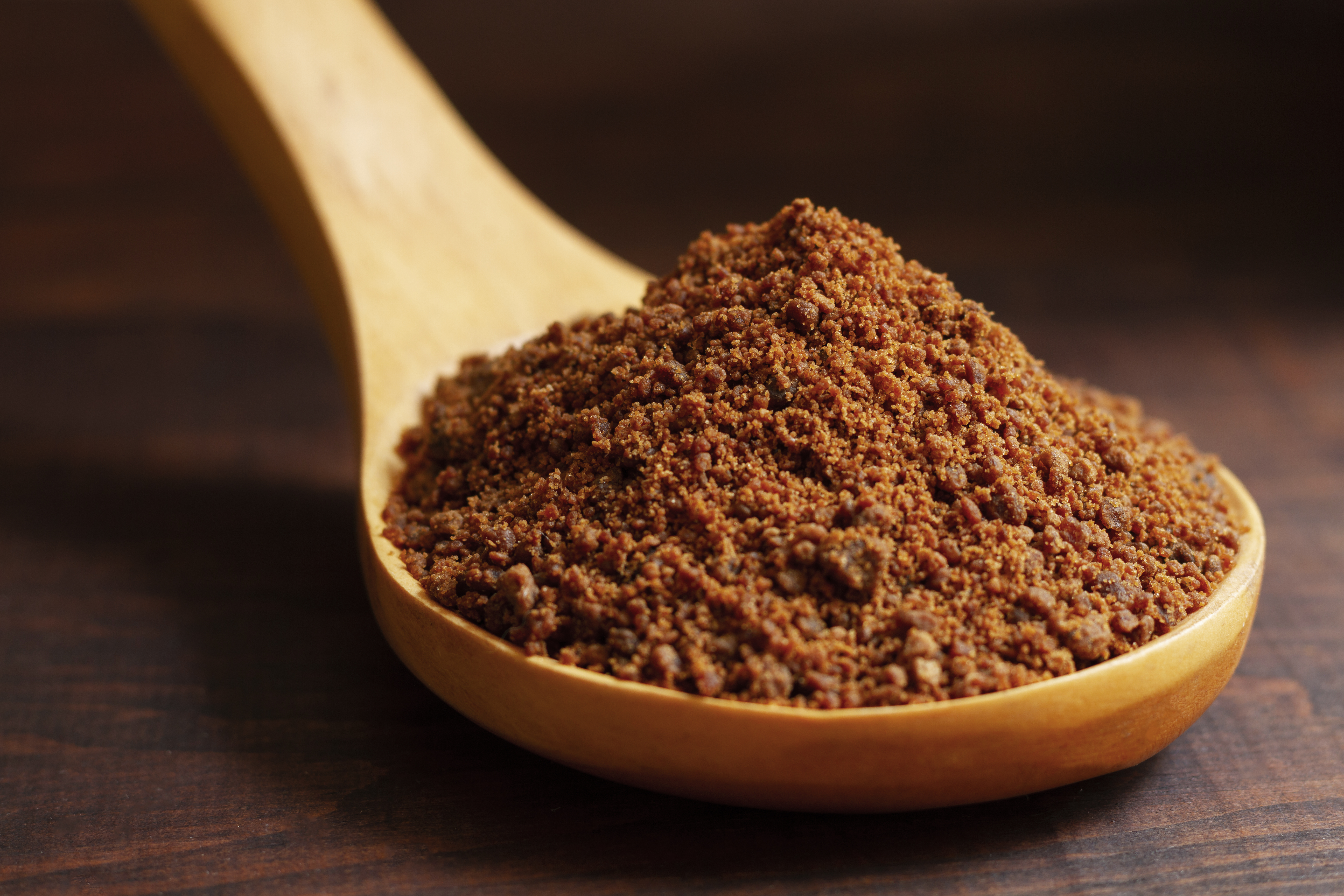
The global natural sweetener market is undergoing a structural shift. Consumers in Europe, North America, the Gulf, and Southeast Asia are increasingly rejecting refined white sugar in favour of unprocessed alternatives — and jaggery is emerging as one of the most commercially viable options for food manufacturers and retail buyers.
This is not a fad. It is driven by three convergent forces: growing health awareness, increasing label-consciousness among shoppers, and tightening sugar regulations in key markets. Here is what buyers need to know.
What Happens to Nutrients During Sugar Refining?
White sugar starts life as sugarcane — a plant with a complex nutritional profile. The refining process strips almost everything away:
- Sugarcane juice is clarified with calcium hydroxide (lime) and often sulphur dioxide
- It is then processed through evaporation, centrifugation, and bleaching
- The molasses (which contains all the minerals) is separated out and sold as a byproduct
- What remains is essentially pure sucrose — energy with no accompanying micronutrients
Jaggery bypasses this entire process. The cane juice is simply boiled and concentrated — the molasses is never separated. This is why jaggery retains a meaningful mineral profile that white sugar simply cannot offer.
Head-to-Head: Nutritional Comparison
| Nutrient (per 100g) | White Sugar | Kolhapur Jaggery |
|---|---|---|
| Calories | 387 kcal | ~360 kcal |
| Sucrose | 99.9g | 65–75g |
| Iron | 0.01 mg | 11 mg |
| Magnesium | 0 mg | 70–90 mg |
| Potassium | 2 mg | 1050 mg |
| Calcium | 1 mg | 80 mg |
| Phosphorus | 0 mg | 40 mg |
| Antioxidants | None | Present (phenolic compounds) |
| Glycaemic Index | ~65 | ~54–56 |
| Chemical additives | SO₂, bleach agents | None (natural) |
The iron content alone is significant: 100g of Kolhapur jaggery provides approximately 55% of the recommended daily intake of iron. For markets in the Middle East and South Asia where iron deficiency is prevalent, this is a meaningful differentiator.
Why Health-Conscious Markets Are Switching
Europe: "Clean Label" Is Now a Purchase Driver
According to European food market research, over 73% of European consumers actively look for "no artificial additives" on food packaging. Jaggery — with its single-ingredient, unrefined profile — is a natural fit for clean-label formulations. Several European artisan chocolate makers, bakeries, and health food brands have already begun substituting white sugar with jaggery powder in their recipes, citing both the flavour complexity and the marketing story.
USA: The Natural Sweetener Segment Is Growing
The US natural sweetener market was valued at over $3.2 billion in 2024 and is projected to grow at 6.8% CAGR through 2030. Jaggery is being positioned alongside coconut sugar and raw honey in the premium grocery segment. Whole Foods Market, Thrive Market, and several US ethnic grocery chains now stock Indian jaggery — and supply is not keeping pace with demand.
Gulf: Diabetic-Aware Consumers Are Switching
The UAE and Saudi Arabia have among the highest diabetes prevalence rates globally. Health-conscious consumers and dietitians in the region are recommending jaggery as a partial substitute for sugar due to its lower glycaemic index and higher mineral content. For buyers in the Gulf, this is a commercially significant trend — the health food retail segment in UAE grew 12% year-on-year in 2024.
How Food Manufacturers Are Using Jaggery
- Baked goods — Substituting refined sugar in cookies, energy bars, and bread for a richer flavour and clean-label appeal
- Beverages — Jaggery powder dissolving in teas, health drinks, and plant-based milk alternatives
- Confectionery — Artisan chocolates and candy using jaggery as the primary sweetener
- Traditional foods — A staple ingredient in South Asian, Southeast Asian, and Middle Eastern traditional recipes
- Nutraceuticals — Jaggery capsules and supplements targeting iron supplementation in health markets
Labelling and Marketing Angle for Buyers
If you are an importer or food manufacturer, jaggery gives you several strong label claims depending on your target market and regulatory environment:
- "Unrefined cane sugar" — accurate and widely understood
- "No added chemicals" — true for Kolhapur jaggery; verify with CoA
- "Source of iron" — claimable in most markets at the mineral levels present in jaggery (verify against local food labelling law)
- "GI Certified origin" — unique to Kolhapur jaggery; premium positioning
- "Vegan" — jaggery is plant-based with no animal derivatives
Buyer's Consideration
Always verify health claims against the food labelling regulations of your target country before printing packaging. Grihvaa provides full CoA with mineral analysis for each batch, which you can use to substantiate label claims with your local food authority.
Summary: The Case for Jaggery
Jaggery is not a niche product anymore. It sits at the intersection of three global macro trends — health consciousness, clean labelling, and demand for authentic origin stories. For food manufacturers and distributors looking to premiumise their product lines or enter the health food segment, Kolhapur jaggery from India offers a credible, certified, and commercially viable option.
The question is not whether jaggery has a market. The question is whether you secure a reliable supply before your competitors do.